Best Coffee Machines UK: How to Choose the Right Machine for Your Home
Finding the best coffee machines UK shoppers can buy isn’t simply about choosing an expensive model. Instead, it’s about finding a machine that matches your coffee preferences, daily routine, available kitchen space, and budget.
Whether you love a strong morning espresso, creamy cappuccino, or smooth latte, the right coffee machine can transform your everyday experience. However, with bean-to-cup machines, espresso makers, and pod systems available, knowing where to start can feel confusing.
Fortunately, choosing the perfect machine becomes easier once you understand the differences.
In this comprehensive coffee machine buying guide, H&S Retailers explains the main machine types, essential features, running costs, and practical buying considerations. You’ll also discover which options suit beginners, families, and everyday coffee enthusiasts.
What Are the Best Coffee Machines UK Buyers Should Consider?
The best coffee machine for home use depends on convenience, coffee quality, maintenance, and long-term affordability.
Generally, UK households can choose between five main types.
| Coffee machine type | Best for | Indicative price |
|---|---|---|
| Bean-to-cup | Fresh coffee and automation | £250–£1,000+ |
| Espresso | Hands-on coffee preparation | £100–£700+ |
| Pod | Quick, convenient drinks | £40–£250 |
| Filter | Multiple cups of black coffee | £25–£200 |
| Manual coffee maker | Affordable home brewing | £15–£100 |
Prices represent broad, illustrative UK shopping ranges rather than current retailer quotations.
For example, a pod machine might suit someone who wants coffee within minutes. Meanwhile, a bean-to-cup model offers greater flexibility for households that regularly enjoy freshly ground coffee.
Therefore, understanding each brewing method is the first step towards making a confident purchase.
Types of Coffee Machines Explained

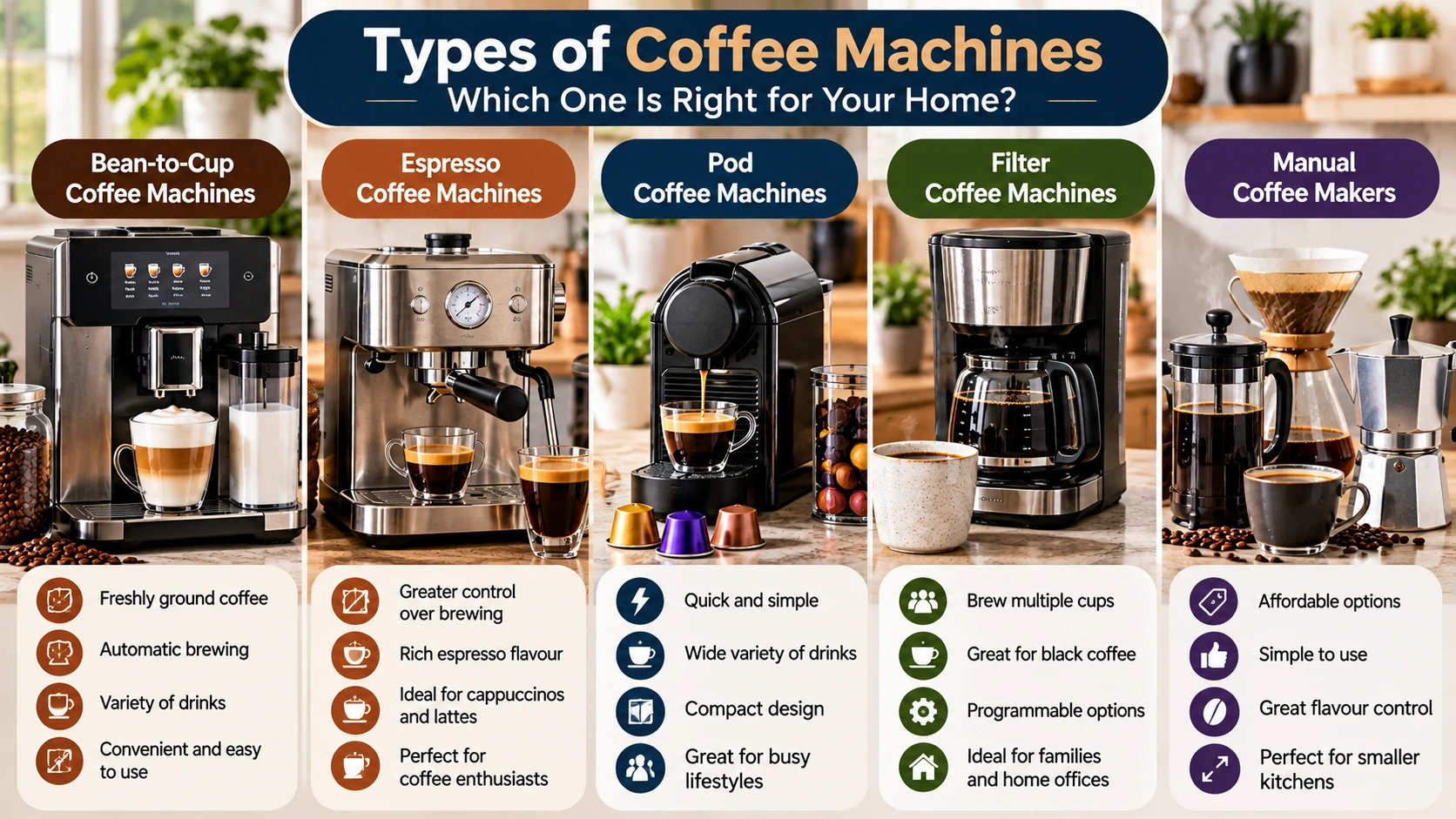
1. Bean-to-Cup Coffee Machines
A bean-to-cup coffee machine UK shoppers choose for convenience typically combines grinding, brewing, and sometimes automatic milk preparation.
Simply add fresh beans, select your preferred drink, and allow the machine to handle the preparation.
Key advantages include:
Freshly ground coffee for every cup.
Adjustable strength and grind settings.
Convenient automated brewing.
Milk-based drinks on compatible models.
However, these machines usually cost more upfront and require regular cleaning.
Best for: Daily coffee drinkers who value freshness and convenience.
For example, the De’Longhi Rivelia Bean-to-Cup Coffee Machine offers automatic drink preparation, multiple recipes, and an integrated milk system.
2. Espresso Coffee Machines
Traditional espresso machines provide greater control over coffee extraction.
Depending on the model, you can adjust grind size, coffee dose, brewing time, and temperature. Consequently, they’re popular among people who enjoy experimenting with different coffee beans.
Additionally, many espresso machines include steam wands for preparing lattes, cappuccinos, and flat whites.
Nevertheless, manual brewing requires practice, and you may need a separate grinder.
Best for: Home baristas who want control over flavour and preparation.
3. Pod Coffee Machines
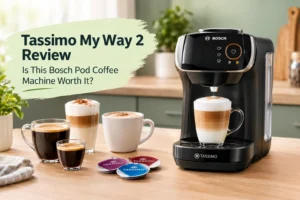
A pod coffee machine UK buyers choose for simplicity uses pre-measured capsules to prepare drinks quickly.
Popular systems include Nespresso, Tassimo, and Dolce Gusto.
Unlike manual espresso machines, pod systems eliminate grinding and tamping. Furthermore, many models offer convenient drink selections.
Their main advantages include compact designs, simple controls, and minimal preparation.
However, capsules can cost more per serving than coffee beans. Additionally, compatibility varies between brands.
Best for: Beginners, smaller households, and busy professionals.
For compact kitchens, consider the De’Longhi Dolce Gusto Genio S Plus Coffee Machine, which features adjustable drink settings and a space-saving design.
4. Filter Coffee Machines
Filter machines prepare coffee by passing hot water through ground coffee.
Unlike espresso machines, they produce larger quantities of brewed coffee rather than concentrated espresso shots.
Moreover, many models include programmable timers, reusable filters, and insulated carafes.
As a result, they’re particularly practical when several people want coffee together.
Best for: Families, home offices, and people who prefer traditional black coffee.
5. Manual Coffee Makers
Manual brewing options include cafetières, moka pots, and pour-over coffee makers.
Although they lack automated brewing, these affordable alternatives provide excellent control over preparation.
Furthermore, they require relatively little worktop space.
Best for: Budget-conscious coffee lovers who enjoy a traditional brewing routine.
How to Choose the Best Coffee Machines UK Homes Need
Choosing the right machine becomes easier when you focus on everyday requirements rather than unnecessary features.
Consider Your Favourite Coffee Drinks
First, identify which drinks you prepare most frequently.
Espresso enthusiasts may prefer a traditional espresso machine. However, latte and cappuccino drinkers should prioritise a reliable milk frothing system.
Similarly, households that enjoy several mugs of black coffee may find filter machines more practical.
Therefore, always match the machine’s capabilities to your actual drinking habits.
Choose the Right Coffee Machine for Your Budget
Your budget should cover more than the purchase price.
For example, affordable pod machines may have higher ongoing capsule costs. Meanwhile, premium bean-to-cup models require a larger initial investment but offer flexibility when buying coffee beans.
A useful starting point is:
Under £100: Basic pod, filter, and manual options.
£100–£250: Entry-level espresso and premium pod machines.
£250–£500: Selected bean-to-cup and espresso models.
Above £500: Advanced automatic and enthusiast machines.
Importantly, consider accessories, cleaning supplies, and replacement filters before deciding.
Check Kitchen Space and Water Capacity
Coffee machines vary considerably in size.
Therefore, measure your available worktop space, including the height beneath kitchen cabinets.
Additionally, check whether the water tank, bean hopper, and drip tray remain easily accessible.
For smaller kitchens, a compact coffee machine may provide greater everyday convenience than a larger automatic model.
Look for Features That Actually Matter
Modern coffee machines include numerous features. However, not every function improves your coffee experience.
Prioritise practical options such as:
Built-in grinder: Supports freshly ground coffee.
Milk frother: Prepares cappuccinos and lattes.
Adjustable strength: Personalises coffee intensity.
Removable water tank: Makes refilling easier.
Automatic cleaning: Simplifies maintenance.
Programmable settings: Saves preferred drinks.
Ultimately, consistent brewing and simple operation matter more than an unnecessarily complicated feature list.
Best Coffee Machines UK: Which Type Fits Your Lifestyle?
Different households have different priorities. Therefore, the ideal machine should match how you actually prepare coffee.
| Your priority | Recommended machine |
|---|---|
| Quick morning coffee | Pod machine |
| Fresh coffee every day | Bean-to-cup |
| Complete brewing control | Espresso machine |
| Several cups together | Filter machine |
| Low initial investment | Manual coffee maker |
| One-touch cappuccino | Automatic bean-to-cup |
For example, someone working from home may appreciate a fully automatic coffee machine that prepares several drinks daily.
Meanwhile, occasional coffee drinkers may prefer the simplicity of a capsule system.
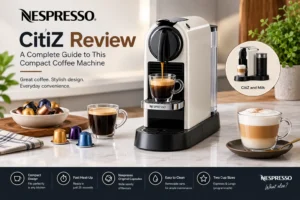
Looking for convenient espresso and milk-based drinks? Explore the Nespresso by De’Longhi Citiz Coffee Machine with Aeroccino Milk Frother at H&S Retailers. Its capsule brewing and separate milk frother offer a practical combination for home coffee lovers.
Are Bean-to-Cup Coffee Machines Worth Buying?
For regular coffee drinkers, bean-to-cup machines can offer excellent long-term value.
Firstly, freshly grinding coffee beans helps preserve aroma and flavour. Secondly, whole beans often cost less per serving than branded capsules.
Additionally, automatic brewing reduces the effort involved in preparing espresso.
However, the higher purchase price means occasional users may not recover the additional investment through ingredient savings.
Therefore, a bean-to-cup machine is generally more attractive for households that drink several coffees daily and appreciate fresh brewing.
How Much Does It Cost to Run a Coffee Machine in the UK?
Coffee machine running costs depend on coffee ingredients, electricity, milk, cleaning products, and maintenance.
For illustration, consider a household preparing two coffees daily.
| Coffee format | Estimated cost per cup | Annual coffee cost |
|---|---|---|
| Whole beans | £0.20 | £146 |
| Ground coffee | £0.18 | £131 |
| Capsules | £0.45 | £329 |
These illustrative calculations assume 730 cups annually. They exclude electricity, milk, machine purchase costs, and maintenance.
Consequently, coffee beans and ground coffee can offer savings for frequent drinkers.
Nevertheless, pod machines remain attractive because of their lower initial cost and convenient operation.
Common Coffee Machine Buying Mistakes to Avoid
Even experienced buyers sometimes overlook important details.
Choosing based on price alone: A cheaper machine may involve expensive capsules or additional accessories. Therefore, compare total ownership costs.
Ignoring maintenance: Milk systems, grinders, and brewing components require regular cleaning. Always check the manufacturer’s instructions.
Overlooking water hardness: Hard water can cause limescale buildup. Consequently, suitable filtration and regular descaling help protect machine performance.
Buying unnecessary features: Premium automation isn’t essential if you only drink occasional black coffee.
By avoiding these mistakes, you can choose a machine that remains practical beyond the first few weeks.
FAQ’s
What is the best coffee machine for home use in the UK?
For daily fresh coffee, a bean-to-cup machine is a strong choice. However, pod machines suit convenience-focused households, while espresso machines provide greater brewing control.
Which coffee machine is best for beginners?
Pod coffee machines are generally easiest for beginners because they require minimal preparation. Alternatively, automatic bean-to-cup machines offer convenient fresh coffee.
Is a bean-to-cup machine better than a pod machine?
Bean-to-cup machines offer greater flexibility with coffee beans and can reduce ingredient costs. However, pod machines typically cost less upfront and require less preparation.
Which coffee machine makes the best cappuccino?
A coffee machine with a reliable milk frother is ideal. Automatic milk systems prioritise convenience, while steam wands provide greater control over milk texture.
How long should a coffee machine last?
A well-maintained coffee machine can last several years. However, lifespan depends on construction quality, frequency of use, water hardness, and maintenance.

Find Your Ideal Coffee Machine at H&S Retailers
Choosing from the best coffee machines UK shoppers can buy becomes much easier when you understand your priorities.
Start by considering your favourite drinks, daily consumption, available space, and overall budget. Then, compare brewing methods, useful features, and long-term running costs.
Whether you prefer convenient capsules or freshly ground espresso, the right machine should make every coffee break more enjoyable.
Ready to upgrade your coffee experience? Discover the De’Longhi Rivelia Bean-to-Cup Coffee Machine at H&S Retailers and explore a convenient way to prepare your favourite café-style drinks at home.