Best Bean to Cup Coffee Machine UK: Complete Buying Guide 2026
Finding the best bean to cup coffee machine UK households can rely on is easier when you know which features matter. Whether you enjoy a strong morning espresso, creamy cappuccino or smooth latte, the right machine brings freshly ground coffee into your daily routine.
However, choosing between automatic coffee machines, integrated grinders and milk frothing systems can feel overwhelming. Furthermore, prices vary considerably, so understanding the differences can prevent an expensive mistake.
In this guide, H&S Retailers explains how bean-to-cup coffee machines work, which features deserve your attention and how to choose the best model for your kitchen and budget.
What Is a Bean to Cup Coffee Machine UK?
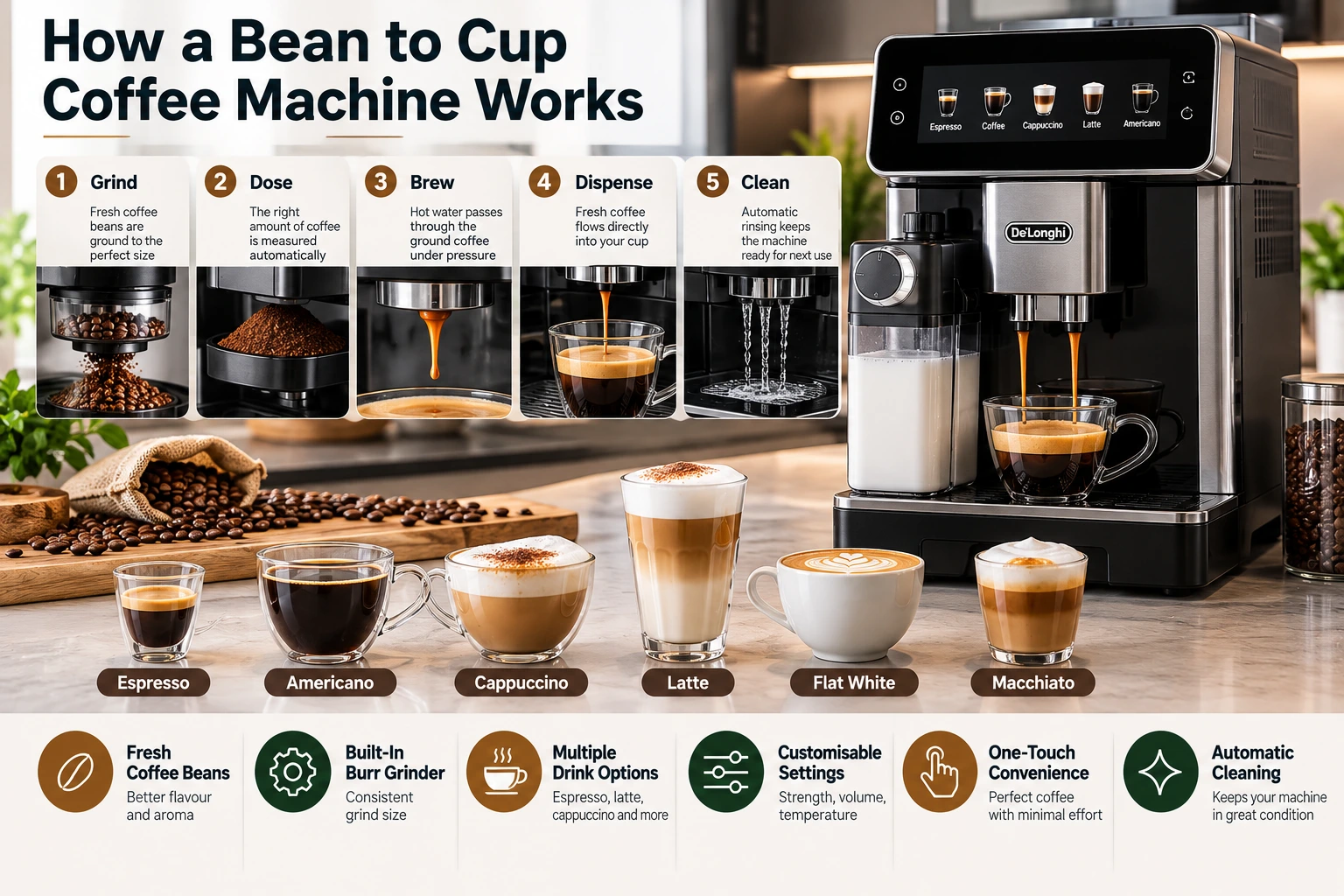
A bean-to-cup coffee machine is an automatic coffee maker that grinds whole beans immediately before brewing. Unlike capsule machines, it uses fresh coffee beans and an integrated grinder to prepare coffee with minimal manual effort.
Typically, the process involves five steps:
Grinding: The built-in grinder prepares the beans.
Dosing: The machine measures the required coffee.
Extraction: Hot water passes through the ground coffee.
Dispensing: Fresh espresso flows into your cup.
Rinsing: Some models automatically rinse their internal circuits.
Consequently, a fully automatic coffee machine combines convenience with control over flavour and strength.
Why Choose a Bean-to-Cup Coffee Machine?

Bean-to-cup machines are popular because they simplify fresh coffee preparation while offering personalisation.
Fresher Coffee and Better Flavour
Fresh grinding helps retain coffee’s aromatic compounds. Therefore, using whole beans can deliver a richer sensory experience than relying on grounds stored for extended periods.
Additionally, adjustable grinder settings allow you to experiment with different beans and extraction results.
Convenient One-Touch Coffee
Modern automatic machines can prepare espresso, americano and, on suitable models, milk-based drinks at the press of a button.
As a result, they’re particularly practical for busy mornings.
Greater Customisation
Depending on the model, you can adjust coffee strength, drink volume, grind size and temperature.
Furthermore, advanced machines may save individual preferences, making everyday brewing more convenient.
Best Bean to Cup Coffee Machine UK: Top Models to Consider
The best model depends on your budget, favourite drinks and willingness to perform maintenance.
| Coffee machine | Main advantage | Best for |
|---|---|---|
| De’Longhi Magnifica S | Simple automatic espresso preparation | Budget-conscious buyers |
| Philips 3300 LatteGo | Convenient automatic milk system on compatible variants | Latte and cappuccino lovers |
| De’Longhi Rivelia | Interchangeable bean hoppers and drink personalisation | Coffee enthusiasts |
| Siemens EQ500 | Automatic drinks and convenient controls | Busy households |
| Jura E6 | Premium brewing and maintenance features | Premium buyers |
De’Longhi Rivelia: A Versatile Choice
The De’Longhi Rivelia Bean-to-Cup Coffee Machine is particularly interesting for households that enjoy different coffee varieties.
Its Bean Switch System makes changing beans convenient, while compatible variants offer automatic milk preparation and personalised drink settings.
Consequently, it’s worth considering if you regularly switch between espresso and milk-based drinks.
Internal linking CTA: Looking for a versatile automatic coffee maker? Explore the De’Longhi Rivelia Bean-to-Cup Coffee Machine at H&S Retailers and discover its drink options, milk system and personalised brewing features.
How to Choose the Best Bean to Cup Coffee Machine UK
Before purchasing, focus on features that directly affect everyday usability.
1. Built-In Grinder Quality
An integrated burr grinder is essential for consistent coffee preparation.
Both ceramic and stainless-steel burr grinders can perform well. However, grind consistency, adjustability and overall construction matter more than material alone.
Ideally, choose a machine with adjustable grind settings so you can experiment with different coffee beans.
2. Manual vs Automatic Milk Frothing
If you enjoy cappuccinos, lattes or flat whites, milk preparation should influence your decision.
Automatic milk frothing systems offer convenient preparation with minimal intervention.
Meanwhile, manual steam wands provide greater control over milk texture but require practice.
Therefore, a bean to cup coffee machine with milk frother should match your preferred drinks and daily routine.
3. Water Tank and Bean Hopper Capacity
Larger water tanks reduce the frequency of refilling, particularly in households with several coffee drinkers.
For example, a tank around 1.8–2 litres can be convenient for frequent use.
Similarly, a generous bean hopper simplifies preparation. Nevertheless, keeping beans fresh matters more than storing excessive quantities.
4. Cleaning and Maintenance
An automatic coffee machine still requires regular maintenance.
Look for removable drip trays, accessible brewing components, descaling alerts and practical milk-system cleaning.
Furthermore, check whether the machine uses replaceable water filters.
Easy maintenance can make a substantial difference to long-term satisfaction.
5. Size and Kitchen Compatibility
Before buying, measure your worktop and available cabinet clearance.
Additionally, ensure you can access the bean hopper, water tank and waste container without moving the appliance.
This consideration is especially important in smaller UK kitchens.
Bean to Cup Coffee Machine UK Price Guide
Bean-to-cup machines generally cost more upfront than basic pod coffee makers.
According to Which?, UK models range from approximately £250 to over £1,500, depending on their features and specifications.
| Budget | Typical features |
|---|---|
| £250–£400 | Basic automatic espresso and manual milk frothing |
| £400–£700 | More drink presets and possible automatic milk systems |
| £700–£1,000 | Advanced customisation and convenience |
| £1,000+ | Premium interfaces, materials and automation |
These are indicative price categories, not fixed market prices.
Importantly, expensive machines don’t automatically produce better coffee. Instead, prioritise reliable brewing, convenient cleaning and functions you will actually use.
Bean-to-Cup vs Pod Coffee Machines: Which Is Better?
Both systems offer convenient home coffee, although their strengths differ.
| Feature | Bean-to-cup | Pod machine |
|---|---|---|
| Coffee source | Whole beans | Compatible capsules |
| Purchase cost | Generally higher | Generally lower |
| Fresh grinding | Yes | No |
| Customisation | Often extensive | Usually limited |
| Maintenance | More involved | Often simpler |
| Cost per drink | Often lower | Depends on capsule price |
Bean-to-cup machines generally suit frequent coffee drinkers who prioritise freshness and flexibility.
However, pod machines can be ideal for occasional users who prefer simplicity.
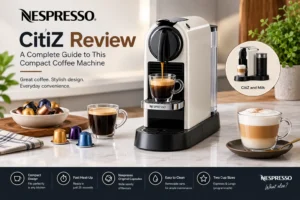
Internal linking CTA: Prefer quick coffee without grinding beans? Discover the Nespresso by De’Longhi Citiz Coffee Machine with Aeroccino at H&S Retailers, a convenient capsule-based alternative for espresso and milk-based drinks.
How Much Does a Bean-to-Cup Coffee Machine Cost to Run?
Running costs depend on coffee beans, milk, electricity, cleaning products and maintenance.
For example, assume you purchase 1kg of coffee beans for £20 and use 10g per drink.
That provides approximately 100 coffees, resulting in a bean cost of £0.20 per cup.
Illustrative Coffee Bean Cost Calculator
2
Cost per 1kg beans
£20
Bean cost per cup
£0.20
Annual bean cost
£146.00
Assumes 10g of beans per drink. Excludes milk, electricity, machine purchase and maintenance.
Nevertheless, household consumption and ingredient costs vary.
For regular coffee drinkers, whole beans may offer savings compared with repeatedly purchasing branded capsules or takeaway coffee.
Common Mistakes When Buying an Automatic Coffee Machine UK
Even carefully chosen machines can disappoint if buyers overlook practical details.
Paying for unnecessary features: Numerous drink presets are less useful if you regularly prepare only espresso.
Ignoring milk-system maintenance: Automatic milk preparation is convenient, but cleaning the system can require additional effort.
Choosing unsuitable beans: Extremely oily beans may cause problems in some grinders. Therefore, follow manufacturer recommendations.
Forgetting water hardness: Hard water contributes to limescale buildup. Consequently, appropriate filtration and descaling are important.
Overlooking warranty coverage: Finally, check product support, replacement parts and warranty terms before purchasing.
Frequently Asked Questions About Bean-to-Cup Coffee Machines
What Is the Best Bean to Cup Coffee Machine UK for Beginners?
The De’Longhi Magnifica S is a useful entry-level model to compare. It offers automatic espresso preparation without requiring advanced controls. However, beginners who prefer milk-based drinks may benefit from an automatic frothing system.
Are Bean-to-Cup Coffee Machines Worth Buying?
Yes, particularly for households that drink coffee daily. They combine fresh grinding, automatic brewing and drink customisation. However, occasional users may find capsule machines more economical initially.
Can You Use Ground Coffee in a Bean-to-Cup Machine?
Some models include a separate compartment for pre-ground coffee. However, compatibility varies, so always check the manufacturer’s instructions.
How Often Should You Clean a Bean-to-Cup Coffee Machine?
Clean milk-contact components according to the manufacturer’s instructions, usually after use. Empty waste containers regularly and descale when required, considering water hardness and machine alerts.
Which Coffee Beans Work Best?
Medium-roast beans offer a versatile starting point for espresso and milk-based drinks. However, taste preferences vary, and the machine manufacturer’s bean recommendations should take priority.
How Long Does a Bean-to-Cup Coffee Machine Last?
A well-maintained machine can operate for several years. Nevertheless, lifespan depends on build quality, maintenance, water hardness and daily usage.

Final Verdict: Which Bean-to-Cup Coffee Machine Should You Buy?
Choosing the best bean to cup coffee machine UK shoppers need comes down to matching features with everyday habits.
For straightforward espresso, consider an entry-level automatic model. Meanwhile, milk-coffee enthusiasts may prefer an integrated frothing system.
Additionally, households wanting personalised drinks and convenient bean switching should consider the De’Longhi Rivelia.
Ultimately, focus on grinder quality, cleaning, dimensions and long-term ownership costs rather than unnecessary extras.
Ready to upgrade your coffee routine? Explore the De’Longhi Rivelia Bean-to-Cup Coffee Machine at H&S Retailers and compare its features with your preferred brewing style