Best Vacuum Cleaner for Pet Hair: What Should You Look For?
Living with dogs or cats brings plenty of joy, but pet hair on carpets, sofas, rugs and clothing can make everyday cleaning more challenging. Choosing the right vacuum cleaner can help you remove loose fur, collect dust and keep your home looking cleaner. However, not every model is designed to handle stubborn hair or different flooring types.
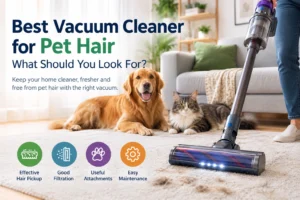
The best vacuum cleaner for pet hair should combine effective hair pickup, a suitable brush head, easy maintenance and reliable filtration. Whether you have a long-haired cat, a shedding dog or several pets, this guide explains which features matter most and how to choose a vacuum cleaner that suits your home, cleaning routine and budget.
What Makes the Best Vacuum Cleaner for Pet Hair?
A good pet vacuum should do more than collect visible fur from the floor. It should also help lift hair from carpet fibres, remove fur from upholstery and make regular maintenance easier.
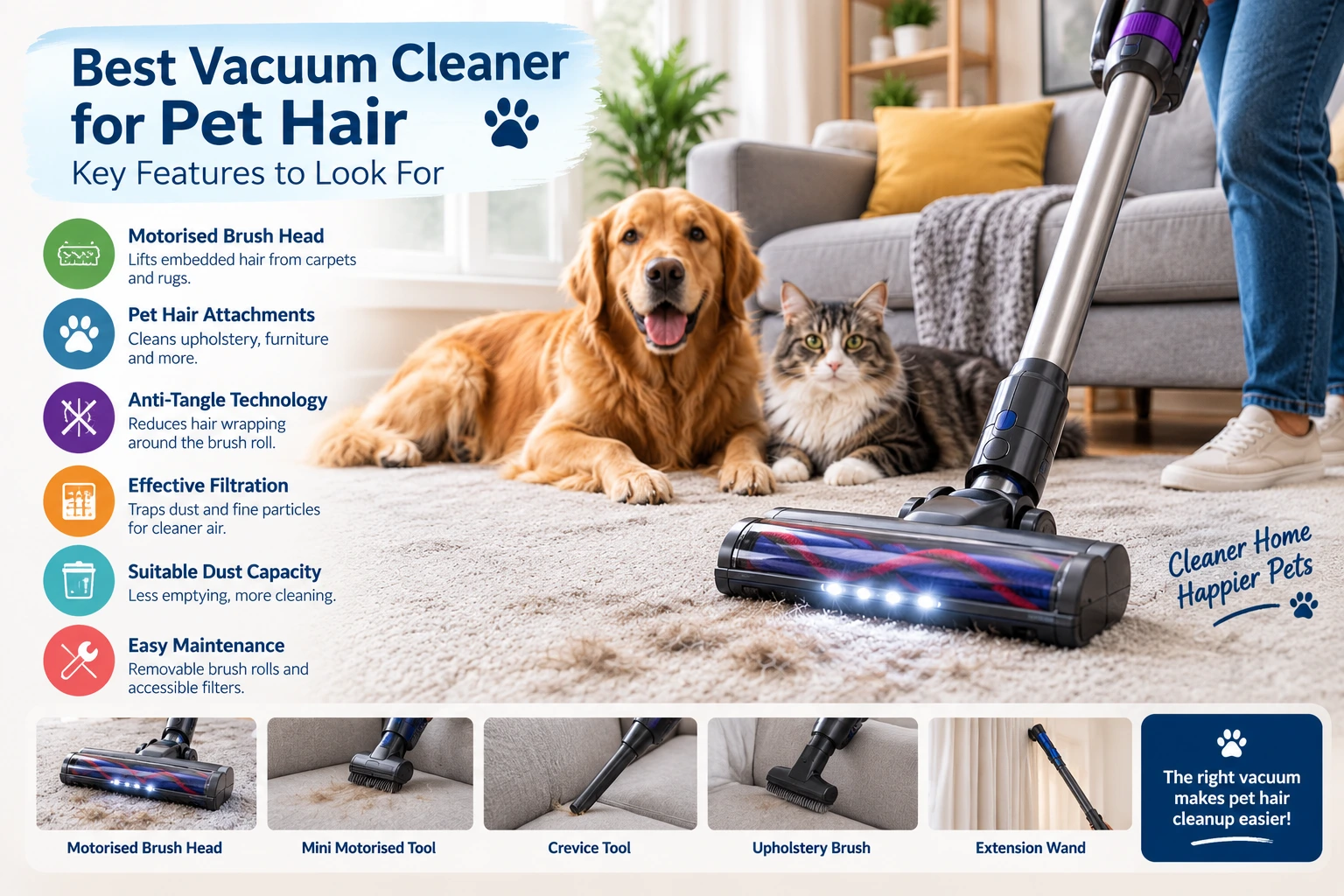
When comparing models, look for these important features:
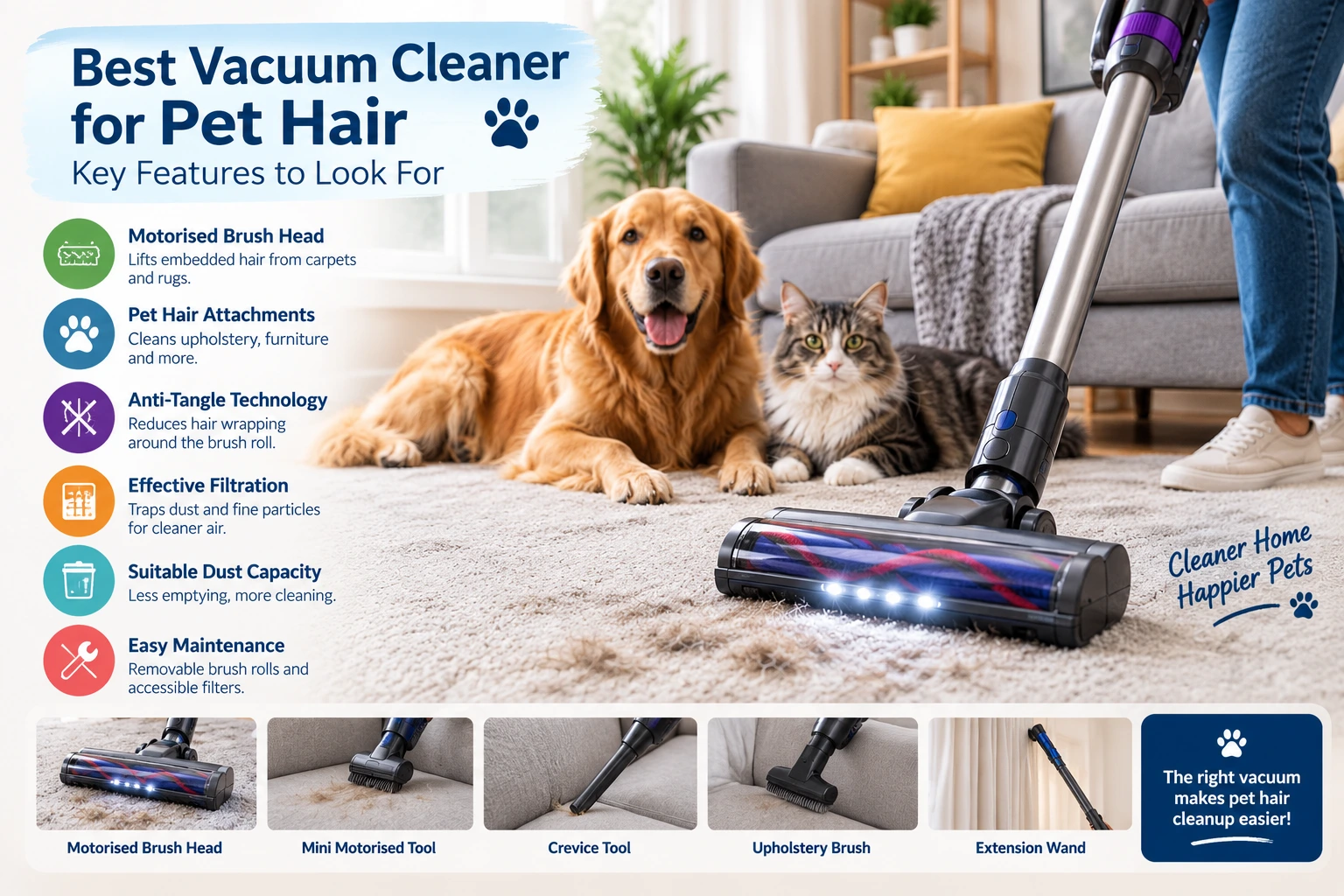
- Motorised brush head: Helps lift embedded hair from suitable carpets and rugs.
- Pet hair attachments: Designed to clean upholstery, furniture and other areas where fur collects.
- Anti-tangle technology: Can reduce hair wrapping around the brush roll.
- Effective filtration: Helps retain fine dust and particles when the complete filtration system is properly designed.
- Suitable dust capacity: Reduces interruptions when cleaning a larger home.
- Easy maintenance: Removable brush rolls and accessible filters make regular cleaning simpler.
The right combination depends on your flooring, pet’s coat and how frequently you vacuum. A household with two shedding dogs may need different features from a small flat with one short-haired cat.
1. Cordless vs Corded Vacuum Cleaners for Pet Hair
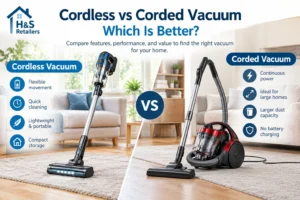
One of the first decisions is whether to choose a cordless or corded vacuum cleaner. Both can be effective for pet hair, provided they have suitable cleaning performance and attachments.
| Feature | Cordless vacuum | Corded vacuum |
|---|---|---|
| Convenience | Easy to move between rooms | Cable management required |
| Cleaning time | Limited by battery runtime | Continuous while plugged in |
| Portability | Often lightweight and versatile | Depends on the model |
| Dust capacity | Often smaller, but varies | Can be larger, depending on design |
| Best suited for | Quick cleaning and smaller homes | Longer cleaning sessions and larger areas |
When is a cordless pet vacuum better?
A cordless vacuum can be convenient for collecting fur from floors, stairs and furniture throughout the day. Many models convert into handheld cleaners, making them useful for sofas, pet beds and car interiors.
However, check the battery runtime in the cleaning mode you intend to use. High-power settings and motorised brush heads can reduce usable runtime.
When should you choose a corded vacuum?
A corded model may be more practical if your home has several carpeted rooms, multiple pets or large areas that need regular cleaning. You can continue cleaning without waiting for a battery to recharge.
For convenient everyday cleaning, explore our cordless vacuum cleaner options. The Dreame R20 SE offers cordless operation, a stated runtime of up to 90 minutes and a design suited to hard floors and carpets.
2. Choose the Right Brush Head for Pet Hair
The floor head is one of the most important features when selecting a vacuum for pet hair.
Motorised brush rolls
A motorised brush roll uses rotating bristles to help lift hair and dirt from carpet fibres. This can be particularly useful for homes with thick carpets or rugs where loose fur becomes trapped.
However, brush heads vary considerably. Check whether the manufacturer recommends the attachment for your specific flooring, especially if you have delicate rugs or hard floors.
Anti-tangle brush technology
Long pet hair can wrap around a conventional brush roll and reduce cleaning efficiency. Some modern vacuum cleaners use specially shaped brush rolls or comb-like mechanisms to reduce tangling.
These features can make maintenance easier, but they do not eliminate it completely. Inspect and clean the brush according to the manufacturer’s instructions.
Soft brush heads for hard floors
If your home has wood, laminate, tile or other hard flooring, consider a floor head designed for these surfaces. A suitable soft roller or hard-floor attachment can collect fur and dust while helping prevent debris from being scattered.
For mixed flooring, a vacuum with interchangeable heads or adjustable settings offers greater flexibility.
3. Look for Useful Pet Hair Attachments
Pet hair does not stay on the floor. It often collects on sofas, cushions, stairs, curtains and pet beds.
A vacuum with the right accessories can help clean these areas without requiring a separate machine.
Useful attachments include:
- Mini motorised tool: Helps remove fur from upholstery and suitable fabric surfaces.
- Crevice tool: Reaches narrow gaps between sofa cushions and along skirting boards.
- Upholstery brush: Helps clean furniture and other fabric surfaces.
- Extension wand: Makes it easier to reach suitable elevated or awkward areas.
Before purchasing, check which accessories are included in the box. Some manufacturers sell pet tools separately, so the advertised price may not include every attachment you need.
4. Filtration and Odour Control in Pet-Friendly Homes
Pets can bring additional dust, dander and outdoor particles into the home. If filtration is important to you, pay attention to the complete vacuum system rather than relying on a single specification.
What should you know about HEPA filtration?
Some vacuum cleaners use HEPA or other high-efficiency filters to retain fine airborne particles. However, the presence of a filter alone does not guarantee that the entire machine effectively retains those particles. Seals, airflow design and correct maintenance also matter.
Check the manufacturer’s filtration specifications and follow its guidance for cleaning or replacing filters.
How can you manage pet-related odours?
Some vacuum cleaners include odour-control filters or compatible scented accessories. These may help manage smells, but they are not a substitute for regularly cleaning pet bedding, removing collected fur and emptying the dust container.
If you are sensitive to fragrances, check the ingredients and suitability of any scented accessories before using them.
5. Bagged vs Bagless Vacuum Cleaners for Pet Hair
Both bagged and bagless vacuum cleaners can handle pet hair. Your choice should depend on dust disposal, maintenance preferences and ongoing costs.
| Consideration | Bagged vacuum | Bagless vacuum |
|---|---|---|
| Dust collection | Replaceable bag | Reusable container |
| Emptying | Often more contained | Dust may escape during emptying |
| Running costs | Replacement bags required | No regular dust bags |
| Maintenance | Replace bags and maintain filters | Empty container and clean filters |
Bagged models may suit households that prefer a more contained way to dispose of collected debris. Bagless models can be convenient if you want to avoid purchasing replacement bags.
For either type, empty the vacuum carefully and follow the manufacturer’s instructions. If you are concerned about airborne dust, avoid emptying the container near your face and consider a suitable outdoor location where practical.
6. Consider Your Pet, Flooring and Home Size
The best vacuum cleaner for pet hair is not necessarily the most expensive model. Choosing features that match your circumstances is usually more useful than paying for extras you will rarely use.
For dogs that shed heavily
Look for a suitable motorised floor head, a practical dust capacity and a brush roll that is easy to maintain. If you have several carpeted rooms, consider whether a corded model or a long-runtime cordless vacuum will better suit your routine.
For cats and long-haired pets
Long fur can wrap around brush rolls and collect on upholstery. Anti-tangle features and a mini motorised attachment may be especially helpful.
For homes with mostly hard floors
Prioritise a suitable hard-floor head, effective debris pickup and easy manoeuvrability. A large carpet-focused brush roll may not be necessary.
For flats and smaller homes
A compact cordless model may provide enough capacity and cleaning performance while taking up less storage space. Nevertheless, check whether its dust container can handle your typical amount of fur between emptying sessions.
7. Pet Vacuum Maintenance Tips
Even a well-designed pet vacuum needs regular care. Hair, dust and debris can build up around the brush roll, filters and dust container.
Use these simple maintenance practices:
- Inspect the brush roll: Remove tangled hair according to the manufacturer’s instructions.
- Empty the dust container regularly: Do not wait until the vacuum is completely full if performance begins to drop.
- Clean or replace filters: Follow the specified maintenance schedule.
- Check for blockages: Inspect accessible hoses, tubes and attachments if suction decreases.
- Store accessories together: Keep pet tools available so you can clean upholstery and stairs when needed.
Always switch off and disconnect the vacuum before carrying out maintenance. Remove the battery if the manufacturer recommends doing so for your model.
If pet hair collects on sofas, carpets and furniture, consider a vacuum cleaner with a motorised pet tool. The Shark PowerDetect Clean & Empty includes a Motorised Pet Tool and Anti Hair Wrap Plus technology.
FAQ’s
What is the best vacuum cleaner for pet hair?
The best option is a model with effective hair pickup, a suitable brush head, useful pet attachments and manageable maintenance. Consider your flooring, home size and pet’s coat before choosing between cordless and corded designs.
Are cordless vacuum cleaners good for dog hair?
Yes. Many cordless models can remove dog hair effectively, especially when they include a suitable motorised brush and pet tool. Check battery runtime and dust capacity if you have a large home or a dog that sheds heavily.
Does a HEPA filter remove pet hair?
A HEPA filter is designed to capture fine airborne particles, not to pick up loose hair from floors. Brush heads and suction collect the hair, while filtration helps retain fine particles carried through the vacuum.
How often should I vacuum if I have pets?
This depends on shedding, flooring and household needs. Homes with heavily shedding pets may benefit from daily cleaning of high-traffic areas, while other homes may need less frequent vacuuming. Regularly clean pet bedding and upholstery as well.
Are pet-specific vacuum cleaners worth it?
They can be worthwhile if they offer useful features such as motorised pet tools, anti-tangle brush rolls and easy maintenance. Compare the actual specifications rather than assuming every model labelled “pet” performs better.
Final Verdict: Choosing a Pet Hair Vacuum for Your Home
The best vacuum cleaner for pet hair is one that makes regular cleaning easier while meeting your home’s practical needs. Look for effective hair pickup, a suitable brush head, useful attachments, appropriate filtration and straightforward maintenance.
For smaller homes and quick clean-ups, a cordless model may offer greater convenience. For larger homes, extensive carpets or longer cleaning sessions, a corded vacuum may be a better fit. In either case, compare real cleaning performance, included accessories, warranty coverage and ongoing maintenance costs.
At H&S Retailers, explore our vacuum cleaner range to find an option that suits your floors, pets and cleaning routine. With the right features and regular maintenance, you can make pet hair easier to manage and keep your home feeling fresher.