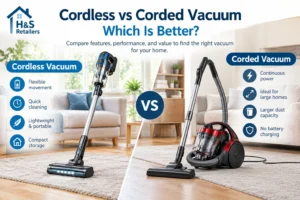
Cordless vs Corded Vacuum Cleaner: Which Is Better?
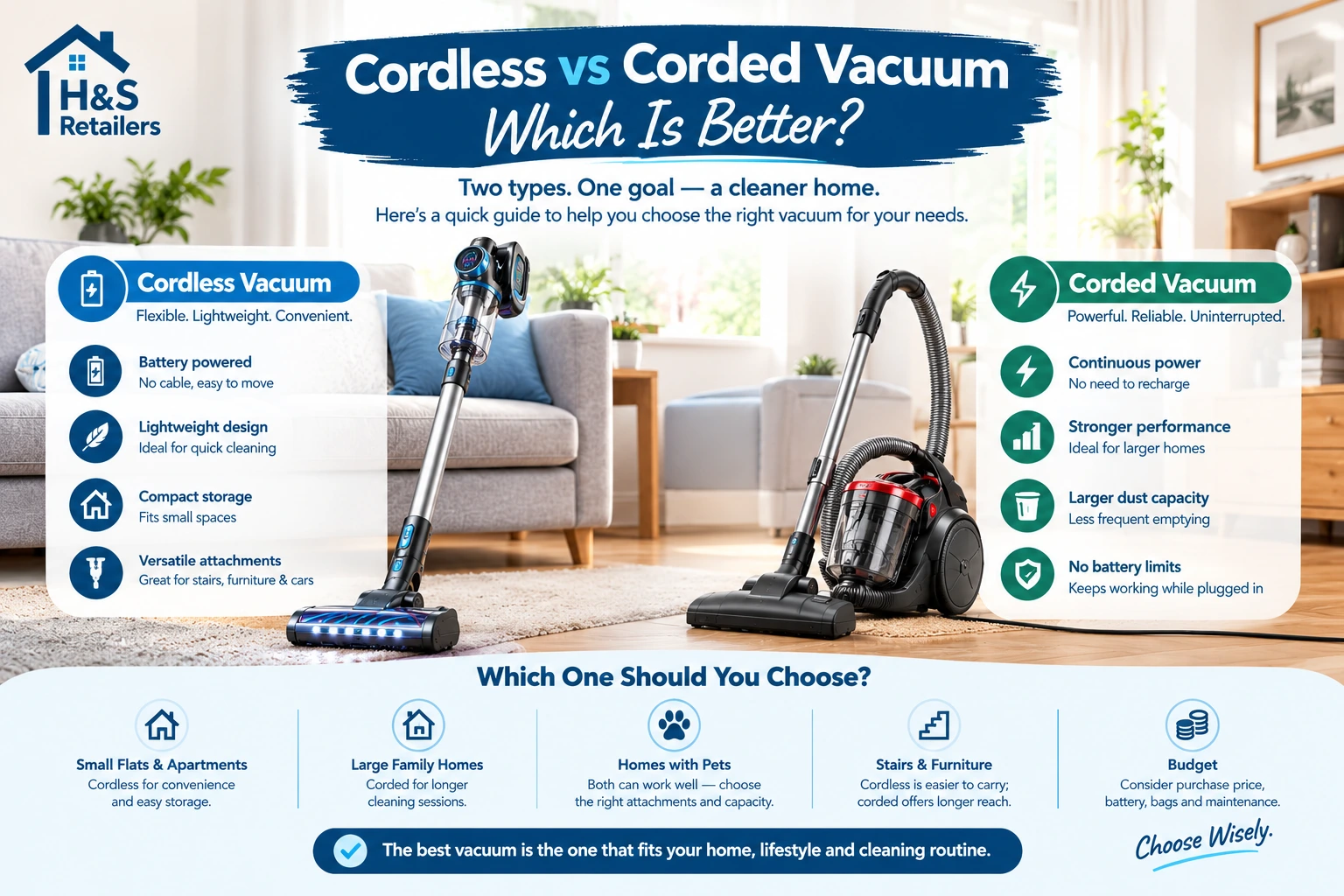
The cordless vs corded vacuum comparison comes down to convenience, cleaning time and your home’s needs. A cordless vacuum cleaner offers flexible movement and quick everyday cleaning, while a corded model provides continuous power without battery charging. Whether you live in a small flat or a large family home, understanding these differences will help you choose the right vacuum cleaner for your flooring, cleaning routine and budget.
In this cordless vs corded vacuum guide, we compare both types to help you understand their advantages, limitations and key features. Whether you need a lightweight cleaner for a small flat or a reliable vacuum for a larger family home, this comparison will help you choose the right option for your needs.
Cordless vs Corded Vacuum: What Is the Difference?
The main difference between a cordless and a corded vacuum cleaner is how it receives power.
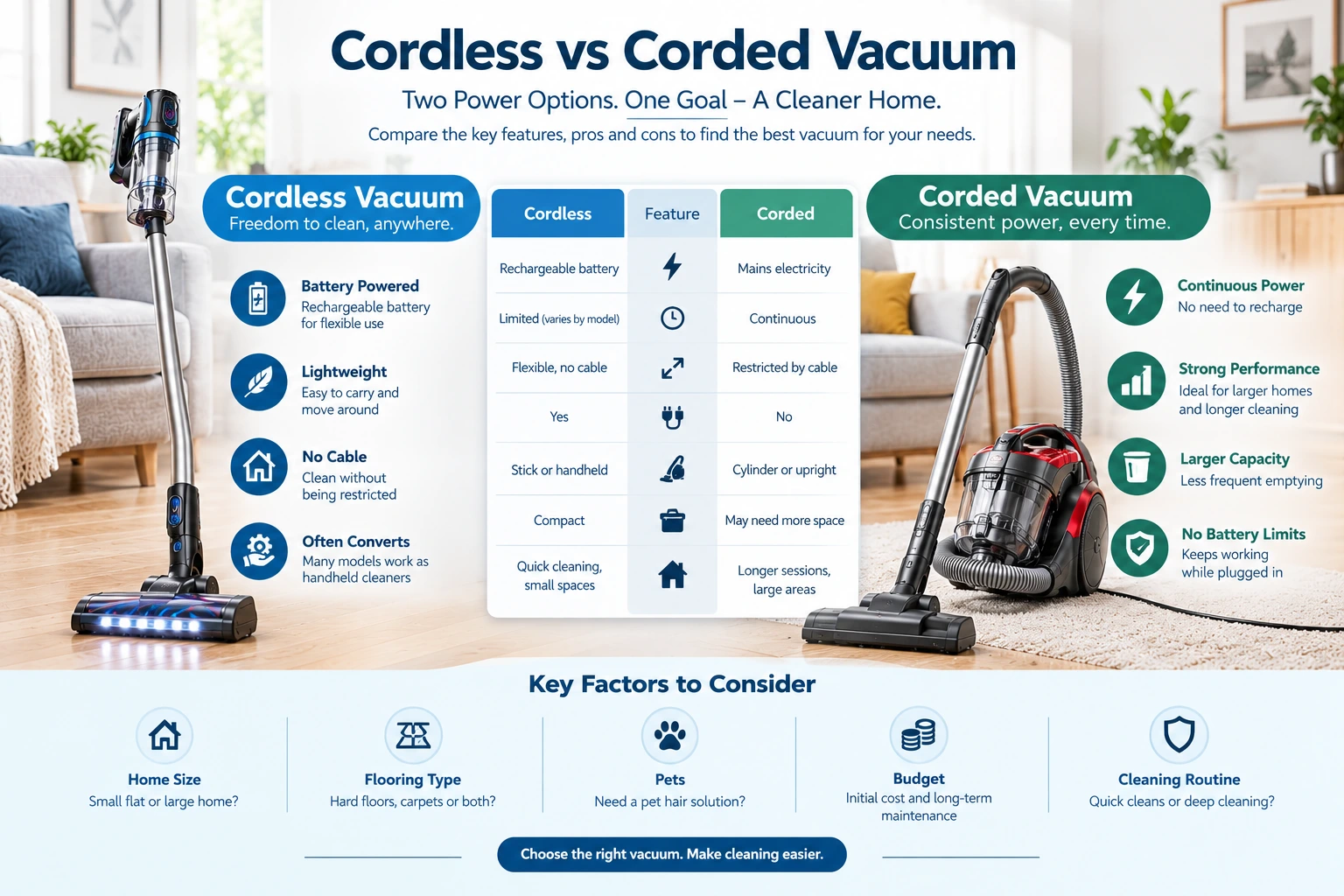
A cordless vacuum uses a rechargeable battery. It can move freely around your home without being connected to a wall socket during cleaning. Most cordless stick vacuums can also convert into handheld cleaners for smaller tasks.
A corded vacuum connects directly to a mains power supply through an electrical cable. It can operate continuously while plugged in, so you do not need to stop cleaning because the battery has run out.
Here is a quick comparison:
| Feature | Cordless vacuum | Corded vacuum |
|---|---|---|
| Power source | Rechargeable battery | Mains electricity |
| Cleaning time | Limited by battery runtime | Continuous while plugged in |
| Mobility | Flexible, no cable | Restricted by cable reach |
| Charging | Required | Not required |
| Typical design | Stick or handheld | Cylinder or upright |
| Storage | Often compact | May require more space |
| Best suited for | Quick, flexible cleaning | Longer cleaning sessions |
Neither type is automatically better for every household. The right choice depends on which features matter most to you.
1. Cordless Vacuum Cleaners: Advantages and Disadvantages
Cordless vacuum cleaners are designed for convenience. Their lightweight construction and portable design make them useful for everyday cleaning, particularly when you want to remove dust, crumbs or small messes without setting up a larger machine.
Advantages of cordless vacuum cleaners
Easy to move around
Without a power cable, you can move between rooms, clean stairs and reach awkward spaces without changing plug sockets.
Convenient for quick cleaning
Cordless models are ready to use when charged. This makes them useful for cleaning kitchen crumbs, everyday dust and pet hair between deeper cleaning sessions.
Flexible attachments
Many cordless stick vacuums include detachable handheld units, crevice tools and upholstery brushes. These accessories can help you clean furniture, car interiors and smaller areas.
Compact storage
Some models come with wall-mounted charging docks or compact stands, making them convenient for homes with limited storage space.
Disadvantages of cordless vacuum cleaners
The main limitation is battery runtime. A vacuum advertised with a long maximum runtime may last considerably less when used on a high-power setting or with a motorised floor head.
Other considerations include:
- Battery charging time between cleaning sessions.
- Potential battery replacement costs over the vacuum’s lifetime.
- Smaller dust containers on some compact models.
- Reduced cleaning time when using high-power modes.
For a small flat or a home that needs frequent quick cleaning, a cordless vacuum can be a practical choice. However, if you regularly clean several large rooms or thick carpets in one session, check the usable runtime carefully.
2. Corded Vacuum Cleaners: Advantages and Disadvantages
Corded vacuum cleaners remain a dependable option for households that prioritise uninterrupted cleaning.
Because they connect to the mains, they can operate continuously while plugged in. Many models also feature larger dust containers, flexible hoses and floor heads designed for different surfaces.
Advantages of corded vacuum cleaners
Continuous cleaning
You do not need to monitor battery levels or recharge between rooms. This is particularly useful for longer cleaning sessions.
Suitable for larger homes
A corded model can be practical for cleaning several rooms in one session, especially when it has a long cable and suitable cleaning attachments.
Consistent power supply
The vacuum does not rely on its battery charge to continue operating. However, actual cleaning performance still depends on the model’s motor, airflow, floor head and design.
Potentially larger dust capacity
Some corded cylinder and upright models have larger dust containers or bags, reducing the need for frequent emptying.
Disadvantages of corded vacuum cleaners
A power cable can make cleaning less convenient. You may need to change sockets when moving between rooms, and the cable can become awkward around furniture or stairs.
Other limitations include:
- Less freedom of movement.
- Cable storage and management.
- A potentially heavier or bulkier design.
- The need for a suitable power socket nearby.
If you have a larger home and prefer to clean everything in one session, a corded vacuum may be a sensible option.
Cordless vs Corded Vacuum: Which Is Better for Different Homes?

The best choice becomes clearer when you consider how you actually clean your home.
Best for small flats and apartments
A cordless stick vacuum is often convenient for smaller living spaces. It can be stored in a cupboard, moved between rooms easily and used for quick daily cleaning.
However, a compact corded vacuum may also work well if you prefer continuous power and do not mind managing a cable.
Best for large family homes
A corded vacuum may be more suitable for homes with several rooms, large carpeted areas or extended cleaning sessions.
Nevertheless, a cordless model with sufficient battery capacity and suitable cleaning performance can also work for larger homes. Consider whether you can complete your usual cleaning routine on one charge.
Best for homes with pets
Both cordless and corded models can remove pet hair, provided they have a suitable floor head and cleaning attachments.
Look for a motorised brush or pet tool designed for your flooring and upholstery. Anti-tangle features can reduce hair wrapping, although regular brush cleaning may still be necessary.
For a larger home with several pets, dust capacity and cleaning runtime are particularly important.
Best for stairs and furniture
Cordless vacuums often have an advantage because they are easier to carry and do not have a power cable to manage.
A cordless model with a detachable handheld unit can be especially useful for stairs, sofas, curtains and car interiors.
However, some corded models also include long hoses and suitable attachments for cleaning above-floor areas.
Which Vacuum Cleaner Is More Powerful?
One common question about the cordless vs corded vacuum comparison is whether a corded model always has stronger suction.
The answer is no. A corded vacuum is not automatically more powerful than a cordless model, and a cordless vacuum is not necessarily weaker.
Cleaning performance depends on several factors:
- Motor and airflow design.
- Floor-head construction.
- Brush-roll performance.
- Suction settings.
- Filtration and overall system design.
A high-quality cordless vacuum may clean some carpets and hard floors very effectively. Similarly, a corded model with a suitable floor head can provide excellent results.
Rather than comparing only advertised suction figures, look for independent cleaning tests on the floor types you have at home.
Battery Life vs Continuous Power: What Matters Most?
Battery runtime is one of the most important differences between cordless and corded vacuum cleaners.
A cordless vacuum may offer several cleaning modes. Lower-power settings can extend runtime, while high-power settings generally use more battery energy.
Before buying, consider:
- How long you normally spend cleaning.
- Whether you use a motorised floor head.
- Whether the battery is removable or replaceable.
- How long the vacuum takes to recharge.
- Whether you can complete your cleaning routine without interruption.
A corded vacuum avoids battery runtime limitations, but cable length and socket availability affect how much area you can cover conveniently.
Cordless vs Corded Vacuum: Which Is Cheaper?
The purchase price is only one part of the overall cost.
Cordless models may require replacement batteries after extended use, depending on battery condition and availability. Some also need specific charging accessories or replacement filters.
Corded models avoid regular battery charging and battery replacement, but bagged versions require replacement bags. Both types need appropriate filter maintenance and occasional replacement parts.
When comparing prices, consider:
- Initial purchase cost.
- Replacement battery availability and price.
- Dust bags, if required.
- Filter replacement.
- Warranty and repair support.
The most economical option is usually the vacuum that performs well for your needs and remains practical to maintain.
Bagged vs Bagless: Another Important Buying Decision
Whether you choose cordless or corded, you may also need to decide between a bagged and a bagless vacuum cleaner.
Bagged models collect dust in a replaceable bag, which can provide a more contained emptying process. Bagless models use a reusable container that you empty when it becomes full.
Neither option is automatically better. If you prefer to avoid purchasing replacement bags, bagless may suit you. If you prefer a more contained dust disposal process, a bagged model may be worth considering.
Follow the manufacturer’s instructions for emptying the container, replacing bags and cleaning filters.
FAQ’s
Is a cordless vacuum better than a corded vacuum?
A cordless vacuum is generally more convenient for quick cleaning, stairs and smaller spaces. A corded vacuum is often more practical for longer cleaning sessions because it does not depend on battery runtime. The better option depends on your home and routine.
Which vacuum cleaner is better for carpets?
Both types can clean carpets effectively. Look for a suitable motorised brush roll, appropriate suction settings and good independent cleaning results. Carpet thickness and the specific floor head also influence performance.
Are cordless vacuum cleaners worth the extra cost?
They can be worth the cost if you value portability, quick cleaning and flexible use. However, consider battery runtime, charging time and future replacement costs before deciding.
Which vacuum cleaner is better for pet hair?
Either type can work well with a suitable pet tool or motorised brush. For larger homes with pets, also consider dust capacity, battery runtime and how easily hair can be removed from the brush roll.
Final Verdict: Which Vacuum Cleaner Should You Choose?
The cordless vs corded vacuum decision comes down to convenience versus uninterrupted cleaning.
Choose a cordless vacuum cleaner if you want flexible movement, quick everyday cleaning, easy stair cleaning and compact storage. It is particularly useful for smaller homes and households that clean frequently in short sessions.
Choose a corded vacuum cleaner if you prefer continuous power, regularly clean large areas or do not want to manage battery charging. It can be a practical choice for longer cleaning sessions and larger carpeted homes.
At H&S Retailers, compare our cordless and corded vacuum cleaner options to find a model that matches your home, flooring and cleaning routine. Focus on practical features, maintenance requirements and genuine cleaning performance so you can choose a vacuum cleaner that works for you over the long term.